
How to Check for a Warrant in Tennessee
A Tennessee warrant check begins at the court named on your citation, summons, or bond paperwork. Prior case records can point there too. The Administrative Office of the Courts gives the same advice: contact the clerk in the county where the case began. No public state name-search covers every county, city, General Sessions, Circuit, and Criminal Court warrant. A county sheriff page may help. Even so, it may show only a local slice, with its own update limits.
- Identify the court. Use the county or city shown on the case paper. If the case began in a city, its Municipal or City Court may hold the citation separately from General Sessions Court.
- Ask the clerk about current process. Give the case or citation number when available and ask whether a warrant or capias is active, which court controls it, and what step the court accepts next.
- Check the serving agency. Use the county directory to reach the county sheriff or city police warrant office. Some agencies publish local searches; others require in-person confirmation or restrict information before service.
- Request an existing record if needed. A Tennessee Public Records Act request goes to the clerk or agency that holds the specific record. It does not require an office to create a statewide list.
- Plan a resolution with advice. Ask the issuing court or a Tennessee attorney about a hearing, motion, surrender, or bond. No single statewide walk-in process applies to every court.
Why Tennessee Has No Public Warrant Index
Tennessee keeps no public statewide warrant name search. The Administrative Office of the Courts offers court information and a courthouse directory, yet it still sends warrant questions to the clerk in the county where the case originated. That clerk holds the answer. A public case docket can show a filing or a hearing without confirming that current process is active. So ask the court directly about the warrant itself. This matters most when a search returns nothing. A blank result can mean the court does not publish its docket, a city case sits in a separate system, information is restricted, or the page covers only a local record set. It is not proof that no Tennessee warrant exists. For direction, use the AOC Self-Help Center. Its courthouse directory helps you identify the court tier. From there, the clerk and the law-enforcement office assigned to the case remain the confirmation points for local status.
Tennessee's Statewide Warrant System
Tennessee runs statewide criminal-information services. Yet none is a public all-warrant registry. The Integrated Criminal Justice Portal, known as TNCRIM, gives authorized users access to agency-controlled justice systems. Its login notice requires statutory authority. It also states that activity is logged. The Wanted Persons information likewise serves approved justice users, not public name searches. TBI's CJIS Division supports the Tennessee Information Enforcement System and Tennessee Crime Information Center functions tied to federal NCIC services. Those Tennessee systems serve law enforcement. They do not replace the record held by the court that issued the warrant. Tennessee also has 32 judicial districts, per the AOC's 2023-24 annual report. Federal law splits the state among three U.S. District Courts: Eastern, Middle, and Western, under 28 U.S.C. section 123. Those counts describe jurisdiction, not warrant coverage. A city ordinance case may stay with a Municipal Court clerk and city police. A General Sessions matter sits with the relevant county court office. For the roles and limits of Tennessee's secure portals, the Warrant System page explains the statewide machinery in detail.
Tennessee's Justice Portals and Warrant Searches
Tennessee's justice portals each answer a different question. TNCRIM is a credentialed interface for approved agencies. TBI describes THOR and THOR+ as law-enforcement information-sharing tools. Its CJIS functions support criminal-information exchange. Neither platform is pitched by the state of Tennessee as a public warrant lookup. So do not read an agency logo or the words "wanted persons" as proof a public search exists. TBI's Top 10 Most Wanted program is public. It is curated around specified violent-felony, major Class A drug-trafficking, and escape criteria, subject to agency approval. The page reports 540 program fugitives apprehended since the start on May 5, 1993. That total is a program outcome, though. It is not a count of active Tennessee warrants. The state's Technology & Innovation Division describes its information-sharing role. The TBI CJIS Division page shows how Tennessee itself describes its criminal-information services.
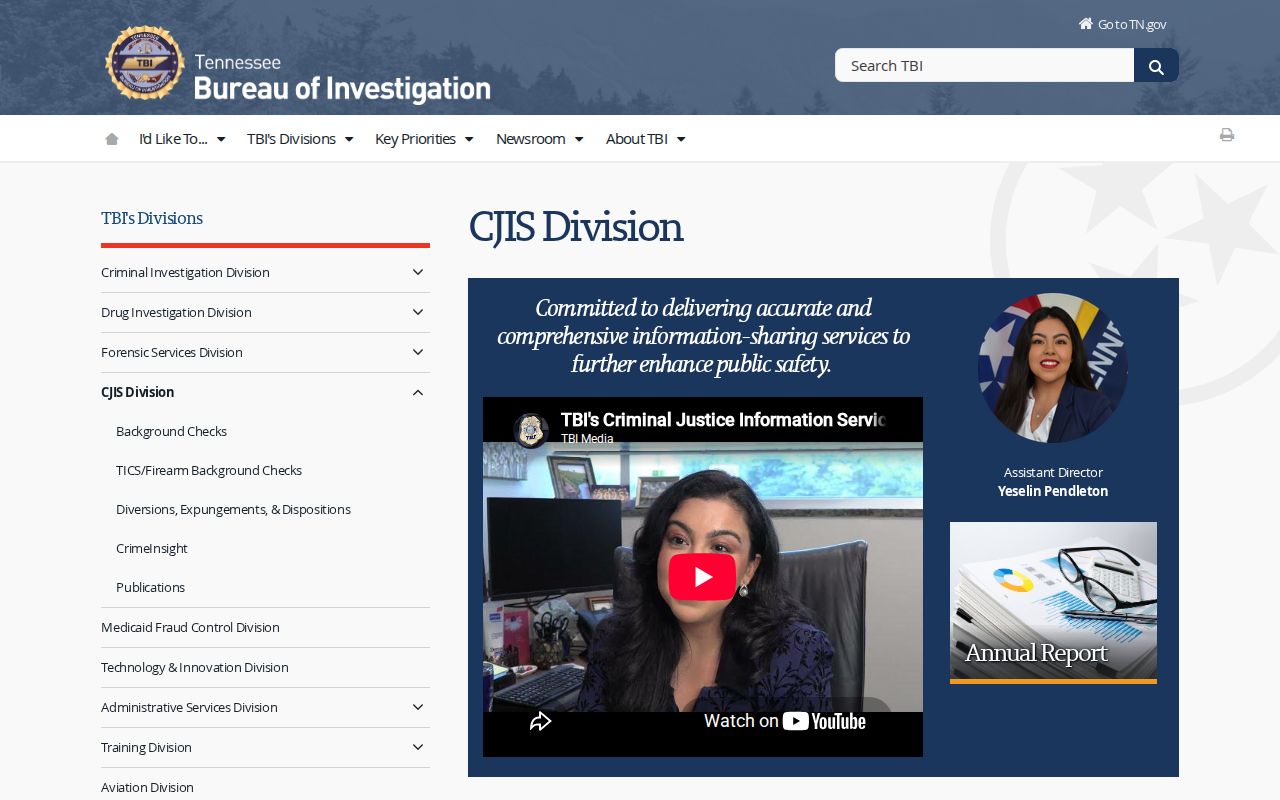
These systems exist for public-safety users, not for fields on any public warrant form. Tennessee publishes no county reporting matrix and no public result schema.
Types of Warrants in Tennessee
In Tennessee, the word "warrant" covers more than one kind of paper. Not every document authorizes an arrest. An arrest warrant follows a judicial officer's probable-cause finding. A bench warrant or failure-to-appear capias can issue when someone skips a court obligation. Search warrants reach specified people or places. A fugitive warrant means another jurisdiction wants custody. Tennessee courts vary, so the court, the case type, and the local docket label all matter.
| Warrant Type | How It Arises | Who Issues It |
|---|---|---|
| Arrest warrant | A judicial officer finds probable cause on a criminal complaint. | Magistrate or other authorized judicial officer |
| Bench warrant / FTA capias | A court orders a person to appear or comply, and process follows a failure. | Court handling the pending case |
| Search warrant | A judge or magistrate authorizes a search based on probable cause. | Judge or magistrate |
| Post-indictment capias | Rule 9 process follows indictment or presentment for a qualifying defendant. | Clerk for the court where the case is pending |
Tennessee's Capias and Civil Warrant Terms
Tennessee court paperwork uses terms that sound alike but do different jobs. “Civil warrant” is one of them. It starts a civil claim in General Sessions Court. That paper alone gives no arrest authority. “Capias” works the criminal side. Tennessee Rule of Criminal Procedure 9 tells a clerk to issue a capias or summons after indictment or presentment, for defendants not in custody or released on bond or recognizance, or whose bail has been forfeited. That step comes after indictment, so keep it separate from any unpaid-ticket label. A missed appearance in a pending matter is different. A Tennessee court may call the result a bench warrant, a capias, or another process term. The court decides what process follows. A missed date can bring court action, yet it does not automatically create a separate criminal charge in every case. One more caution. “Capias pro fine” is not Tennessee’s statewide name for traffic or fine collection, so use it only when the issuing court’s own record does.
- Failure to appear (FTA)
- Not appearing as a court ordered; a court may issue further process.
- Capias
- A writ directing that a person be taken into custody; Rule 9 uses it for defined post-indictment process.
- Civil warrant
- Often the document that starts a General Sessions civil case, not an arrest order.
- Summons
- A court notice directing a person to appear without immediate arrest.
Match the wording on the actual Tennessee case paper, and ask the issuing clerk which court process is active right now.
What a Tennessee Warrant Record Shows
Tennessee has no standard statewide warrant form. A court document may show the process, the person, the alleged offense, the date, the issuing court, and the action required. A law-enforcement index can hold more. It may never reach a public docket. Because local Tennessee systems differ, an online case result may leave out the warrant status or bond field.
| Warrant Number | May be assigned by the issuing court or local agency. No common Tennessee public format was verified. |
|---|---|
| Person | Name and identifying details used in the case. Confirm identity with the issuing clerk. |
| Charge or Matter | The alleged offense or court matter connected to the process. |
| Issuing Court | The court or authorized judicial office controlling the case. |
| Bond | May be set by the court; ask the clerk or jail about the current order. |
| Status | Local terms may include active, served, recalled, or quashed; status can lag between systems. |
How Tennessee Search Results Can Mislead
A useful page is not a final status check. Hamilton County’s sheriff search takes a name, a warrant number, or a partial address. It credits the county court for its data. The page updates daily at 4 p.m. Still, it may miss recent changes, keep already-resolved Tennessee matters, and exclude warrants issued before January 1, 2008. Those limits describe one local tool. Tennessee as a whole has no such rule. Chattanooga’s City Court instructions describe a case and docket search by last name, citation, or docket number. No warrant-status field is promised. A record showing a citation does not prove a Tennessee warrant exists. A blank result does not prove it does not. When a search finds a case, ask the issuing clerk whether process is active, which court controls it, what bond or appearance terms apply, and whether a recall has reached the serving agency. Hamilton’s Open Warrants page states its own update schedule and historical cutoffs plainly. Read those details as local facts, not as a Tennessee-wide description.
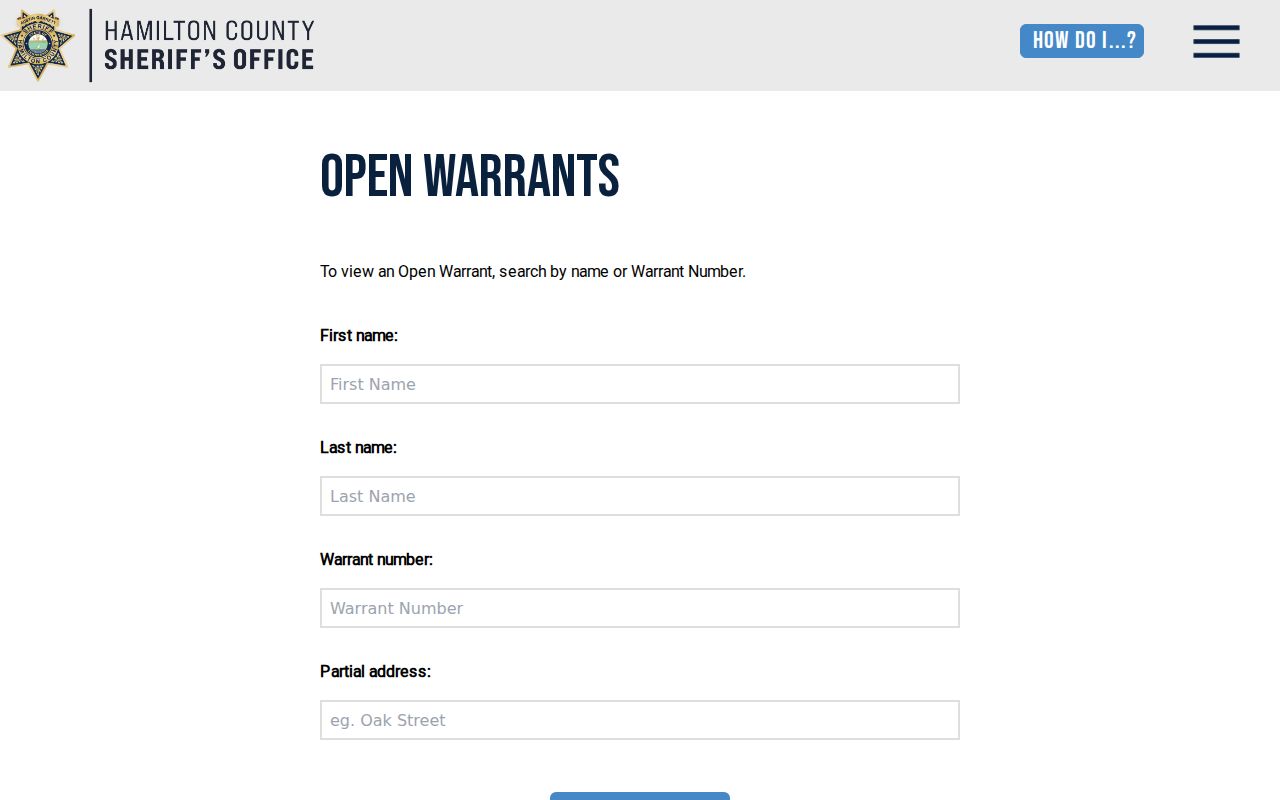
The example shows search inputs and a local disclaimer. It is not a Tennessee result record, so confirm with the county page or the issuing court.
Public Access to Tennessee Warrant Records
Tennessee citizens get access to public records through the Tennessee Public Records Act (TPRA), Tenn. Code Ann. §§ 10-7-501 et seq., unless an exemption, court rule, or other law limits release. No statewide clearinghouse exists. A request goes to whichever office holds the record. That means the relevant clerk, sheriff, or police department. Nothing requires that office to compile a new statewide warrant list from separate files. In practice, each Tennessee request goes out separately.
Key Rules:
Tenn. Code Ann. § 10-7-503 - the custodian generally must provide access, deny in writing, or give an estimated time and cost within seven business days.
TPRA request guidance - a request should identify an existing record with enough detail; inspection and copies follow different procedures.
Public Chapter 352's amendment to Tenn. Code Ann. § 40-11-139(d) gives specific qualifying FTA warrants state/federal database-entry deadlines, not a general public-access mandate.
Tennessee Rule of Criminal Procedure 6 - grand-jury proceedings have their own secrecy rules; do not assume every warrant record is public or sealed.
Juvenile records get extra protection in Tennessee. Tenn. Code Ann. §§ 37-1-153 and 37-1-154 govern them. The statutes reach both juvenile court and law-enforcement files, and TBI investigative material or sealed case information may also be restricted, so ask the custodian which access rule applies.
Tennessee's 2025 FTA Entry Rule
Public Chapter 352, effective July 1, 2025, changed one slice of Tennessee practice. It governs a defined group of failure-to-appear warrants. Those warrants must move into available databases. The law covers specified felony cases and certain serious violent or sexual misdemeanor categories. Deadlines are short. They cover judicial signature, clerk transmission, and agency entry, including NCIC when available. The deadlines concern authorized system entry. They create no public search interface. The coverage stays narrow. Nothing in the act puts every Tennessee traffic, city-ordinance, juvenile, civil, or bench warrant into one index. TNCRIM stays closed to the public. The court-systems technology study describes separate local case platforms, and current Tennessee public guidance still sends warrant questions to the county-of-origin clerk. The official Tennessee Public Chapter 352 materials list the qualifying categories and the timing. Entry in a database and a public docket status are different things, so any Tennessee search result still needs local confirmation from the issuing court.
Tennessee Traffic Holds Are Separate
Miss a court date in Tennessee and your license can pay the price. The Tennessee Department of Safety and Homeland Security, or TDOSHS, runs a compliance process for drivers who fail to appear or settle certain citations. It works apart from any warrant the court issued. That means fixing your license and clearing the warrant are two separate jobs. When a qualifying notice goes out, the Department gives you a 30-day window to resolve the court matter or hand in a correction, a dismissal, a reset date, or proof of satisfaction. The court has to issue or report that update itself. The license side never recalls the warrant for you. The reinstatement schedule lists $65 for a moving-violation citation left unsatisfied and $35 for a non-moving one. Those are reinstatement fees only. They do not cover the fine, court cost, or warrant bond, and paying them does not mean the warrant is gone. Tennessee sets no uniform statewide traffic-warrant fee or bond schedule. Start with the court printed on the citation. Then follow TDOSHS instructions if its notice applies. TDOSHS explains the 30-day compliance notice and the reinstatement process on its own pages, so read both before assuming one step covers everything.
Resolving a Tennessee Warrant
Tennessee courts share no single surrender, bond, or recall procedure, so your first move is always the same: call the clerk of the court that issued the process. Ask directly whether the warrant is active. Ask whether a motion or hearing is available, where an appearance or surrender must happen, what identification to bring, and whether bond has been set. A lawyer adds real weight here. Counsel can contact the court or the prosecutor, advise you on a safe approach, and request that the warrant be recalled or quashed when the facts and local procedure support it. Know what each step actually does. Posting bond gets you out of custody, but it does not dismiss a charge or end the case. Paying a citation through a portal does not always recall the court process either. If the Tennessee court recalls the warrant or accepts a surrender, hold onto the written order, receipt, or docket entry. Then ask whether the sheriff or police department received the update, and handle any TDOSHS license steps separately. Do not count on an amnesty event. Tennessee runs no state-wide warrant-amnesty week. Nashville Safe Surrender was a Davidson County event scheduled for December 12 and 13, 2025, and those dates have passed. Check with the issuing court before assuming any event or payment plan is open now. For local rules, use the county directory below.
Find Warrants by County in Tennessee
Every Tennessee warrant lives in a local file, not a state one. The issuing court and the local law-enforcement agency hold the information you need to confirm it and resolve it. Start with the county or city named on the case paperwork. The big metro counties show how differently local access works. One county may run a public search, while another makes you appear with identification or limits what it shares before service. Tennessee's county pages route you to local court and sheriff information without treating one county's policy as the statewide rule.
Shelby County
Memphis · The sheriff advertises an outstanding-warrant lookup; confirm scope and status with the issuing court.
Davidson County
Nashville · Metro warrant confirmation is in person with photo ID; phone status is not provided.
Knox County
Knoxville · The sheriff directs self-checks to an in-person public counter with photo ID.
Hamilton County
Chattanooga · The local search updates daily but excludes pre-2008 warrants and may lag case changes.
Rutherford County
Murfreesboro · The sheriff states that arrest-warrant details are withheld until service under local policy.
Williamson County
Franklin · Confirm the court and sheriff route with the local county offices.
Montgomery County
Clarksville · Start with the local court and county warrant unit for current instructions.
Open the Counties directory of all 95 Tennessee counties to reach the local warrant-records route for any county. Population rankings for the featured spots come from the Census county table from the 2020 Census Bureau. That table counts people, not warrants.