
The Tennessee Warrant System
A Tennessee warrant starts with a court that holds authority over the matter. An arrest warrant may grow out of a sworn complaint plus a judicial officer's probable-cause finding. General Sessions Court hears many misdemeanor, traffic, and preliminary felony cases, while felonies can move to Circuit Court or a separately established Criminal Court. City courts take local ordinance and traffic matters. Whatever court is named in the paperwork controls the process and what comes next. Once the warrant issues, the clerk maintains the file. A peace officer may then execute it. County sheriffs, municipal police, the Tennessee Highway Patrol, and other officers each play roles set by the warrant and by assignment. A Tennessee warrant can be executed anywhere in the state. Even so, the record, the bond order, and any request to recall stay tied to the issuing court and its local agency. For a local matter, the Counties directory maps the county-level route.
Tennessee TNCRIM Is Not a Public Search
TNCRIM, the Integrated Criminal Justice Portal, serves approved users only. Its login notice restricts access to agencies and people with statutory authority, and it warns that activity is logged for audit. The public login page asks for credentials. There is no name-and-county warrant form and no public account a resident can create to check a personal case. Wanted Persons information inside the portal is an authorized justice function. TBI is listed as the contact for that information, but a contact channel does not turn TNCRIM into a public warrant counter for Tennessee. The project's multi-agency design lets participating government entities work with information they control through a shared browser interface. It does not merge every county docket into a public warrant index. Someone who needs personal status should call the clerk in the county where the case began, which is exactly what the Tennessee Courts Self-Help Center directs. The TNCRIM login notice spells out the access limit, and the Integrated Criminal Justice Initiative overview explains the shared portal model.
Tennessee Statewide Warrant Databases
Tennessee runs several information services, each with its own job. None of them is a complete public name search for active warrants. The Tennessee Bureau of Investigation (TBI) supports state criminal-information exchange through its Criminal Justice Information Services Division and connects authorized users to federal NCIC resources. NCIC belongs to the FBI and serves criminal-justice use. These functions sit apart from the local court record.
| System | What It Indexes | Run By |
|---|---|---|
| TNCRIM / ICJ Portal | Credentialed interface for agency-controlled justice information, including Wanted Persons data. | Participating Tennessee agencies; access requires statutory authority. |
| TCIC / TIES | State criminal-information and enforcement services that support approved public-safety users. | TBI Criminal Justice Information Services Division |
| NCIC | Federal criminal-justice information files, including eligible wanted-person entries. | FBI; authorized agency access |
| THOR / THOR+ | Law-enforcement information-sharing products; TBI does not describe them as public warrant lookups. | TBI Technology & Innovation Division with TDOSHS collaboration |
These systems are not interchangeable. In Tennessee, "statewide" describes an agency information network, not a promise that a resident can search every warrant. The state publishes no county participation matrix, no active-warrant total, and no statewide result fields.
Tennessee Warrant Data and TBI Roles
TBI runs the state's criminal-information infrastructure through distinct teams. CJIS supports state and federal data exchange, including TCIC and TIES functions. The Technology & Innovation Division houses Information Systems and Criminal Intelligence. That work supports public-safety agencies and selected fugitive programs. It does not create a public statewide warrant help line. TBI's Technology & Innovation Division overview describes the information-sharing platforms and where they sit administratively.

The agency overview places THOR and related technology under TBI's current division structure. It offers no public warrant search. The Wanted Persons contact listed in TNCRIM help exists for portal information and technical support, so it cannot confirm whether a personal warrant exists. TBI public-record requests follow a separate process, and investigative records can stay confidential. A TBI records request is not a back door into county court warrants. With a case number or citation in hand, the originating clerk and the serving agency in Tennessee remain the right sources. The TNCRIM Wanted Persons help page names the system contact, and the public-records request page explains the separate records process.
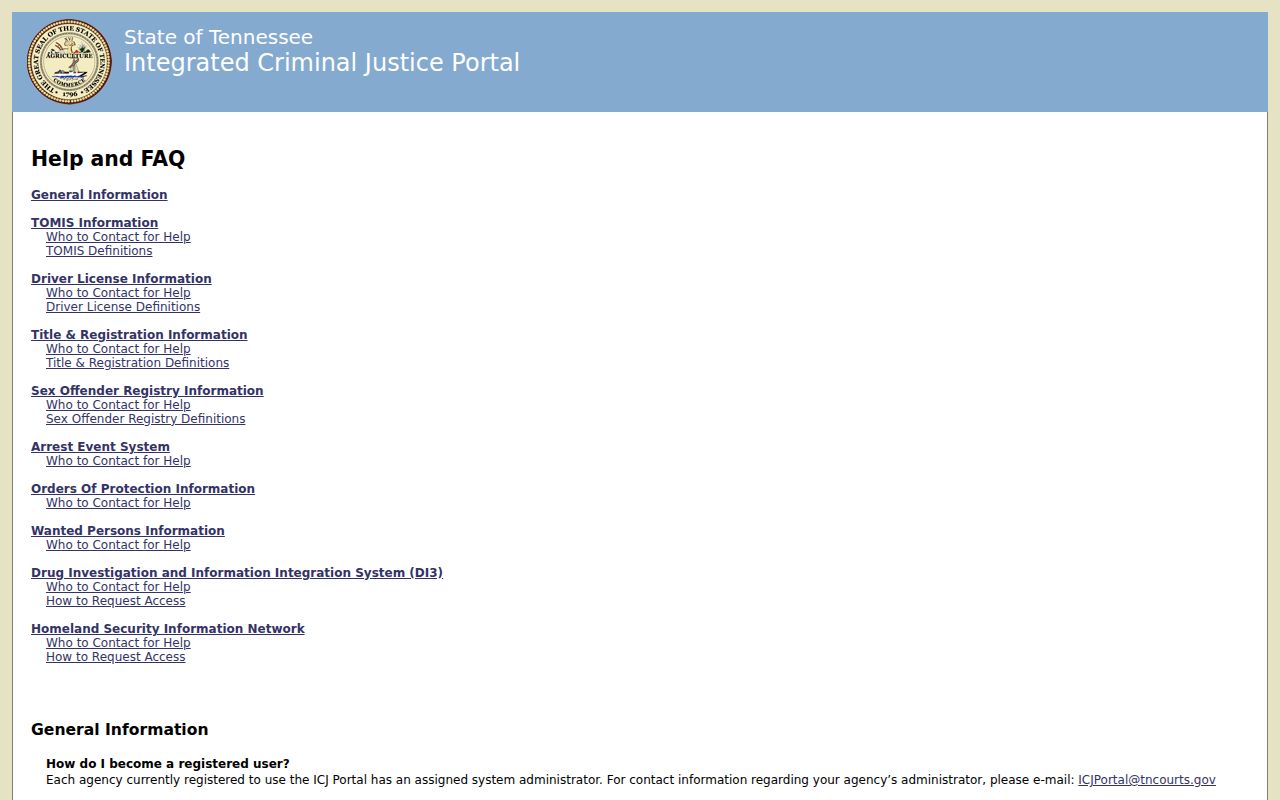
That Tennessee support block serves authorized portal users with technical questions, and it cannot verify a resident's warrant status.
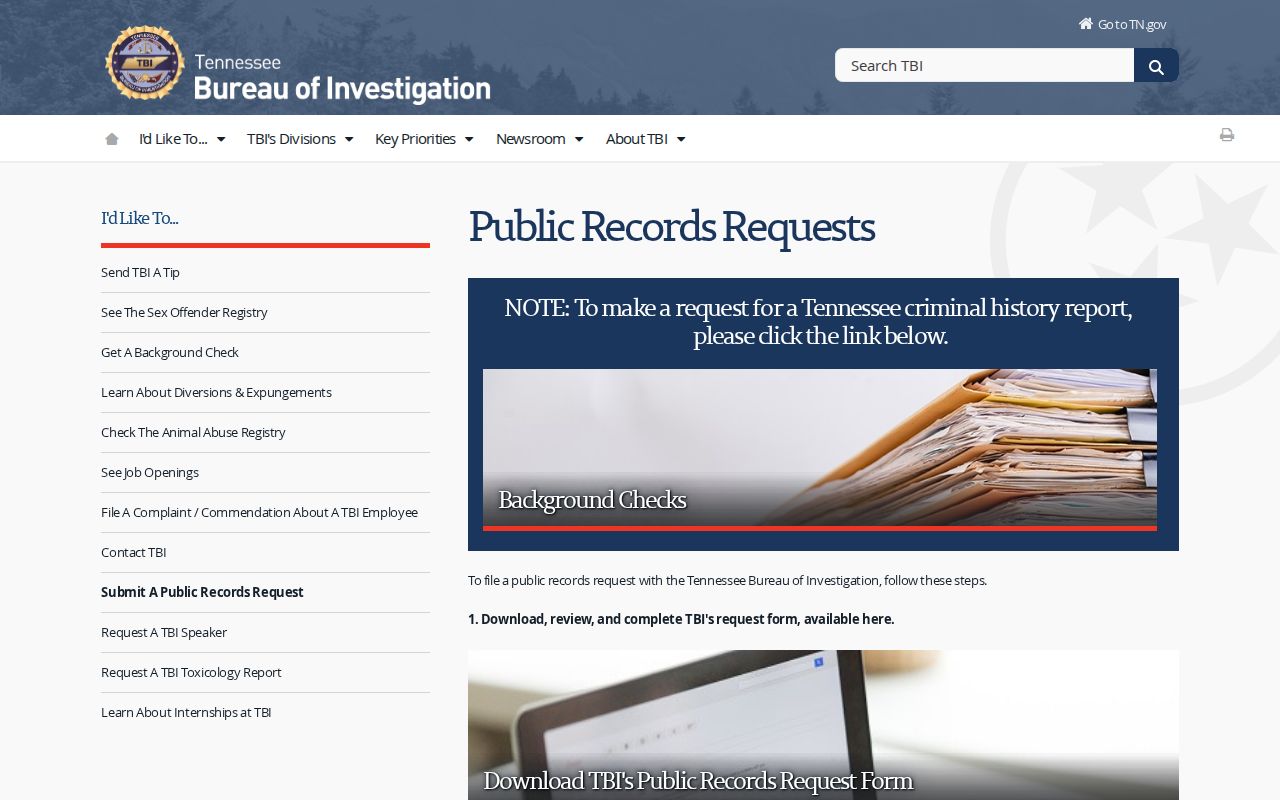
The request instructions cover records TBI itself holds in Tennessee, not local court files or any statewide warrant search.
How a Tennessee County Warrant Enters the Statewide System
Tennessee publishes no universal county-to-state feed that would form a complete active-warrant index. Courts create the process. The clerk issues or records it under the applicable rule. A sheriff or city police agency may then serve it. From there, an authorized agency can enter an eligible warrant into state or federal law-enforcement systems, and each hand-off depends on the law, the court, and the agency handling the case.
Warrant flow: Issuing Tennessee court and clerk › assigned county or city agency › authorized state or federal system, when eligible
A warrant lives in two places at once. The court file sits with the clerk whose court issued it. The officer-facing entry sits in a justice database. In Tennessee, a city citation may stay with the municipal clerk and police department, while a General Sessions case sits with a county clerk and later felony process moves to Circuit or Criminal Court. There is no statewide participation list, public export, standard update frequency, or public field set. The proper check remains the Tennessee court and the serving agency that hold that particular warrant.
Tennessee's 2025 Warrant Entry Rule Is Targeted
Public Chapter 352 took effect July 1, 2025. It amended Tenn. Code Ann. § 40-11-139(d) for a defined set of failure-to-appear warrants. The scope covers felony matters and certain serious violent or sexual misdemeanors. For qualifying process, the clock moves fast. The judicial official, clerk, and entering agency face short deadlines for signature, transmission, and entry in an available state or federal system, NCIC included where available. The Tennessee statute improves law-enforcement visibility for those categories. It does not require every Tennessee warrant to be entered. Nor does it make the resulting systems public. A traffic warrant or city-ordinance warrant outside the defined scope still turns on local court and agency confirmation. The rule also cannot answer whether a particular warrant is active, or whether its entry was updated after court action. The official Public Chapter 352 materials lay out the defined coverage and the timing. Entry rules for authorized databases are one thing. A statewide public search is another, and this requirement creates none.
US Marshals and Fugitive Warrants
The U.S. Marshals Service executes federal court process and leads fugitive investigations. Tennessee falls under three federal districts: Eastern, Middle, and Western. Task forces extend the reach. The Smoky Mountain Regional task force covers the east, a Joint Fugitive Task Force works Middle Tennessee, and the Two Rivers Violent Fugitive Task Force covers the west. Those partnerships widen coordination. They do not add up to a public search. A state warrant stays with the issuing Tennessee court. If another state wants someone found in Tennessee, custody and extradition steps may follow. A local Tennessee court cannot dismiss an out-of-state case. Federal process is different. Start with the relevant U.S. District Court and federal defense counsel. The Marshals district office can explain its official process. No public roster substitutes for a complete warrant check. The U.S. Marshals district directory lists each office's official contact details. PACER can show public federal docket entries, though it offers no all-warrant search and some material may stay sealed. For federal court records, the official PACER access page is the starting point, and it explains what that access covers.
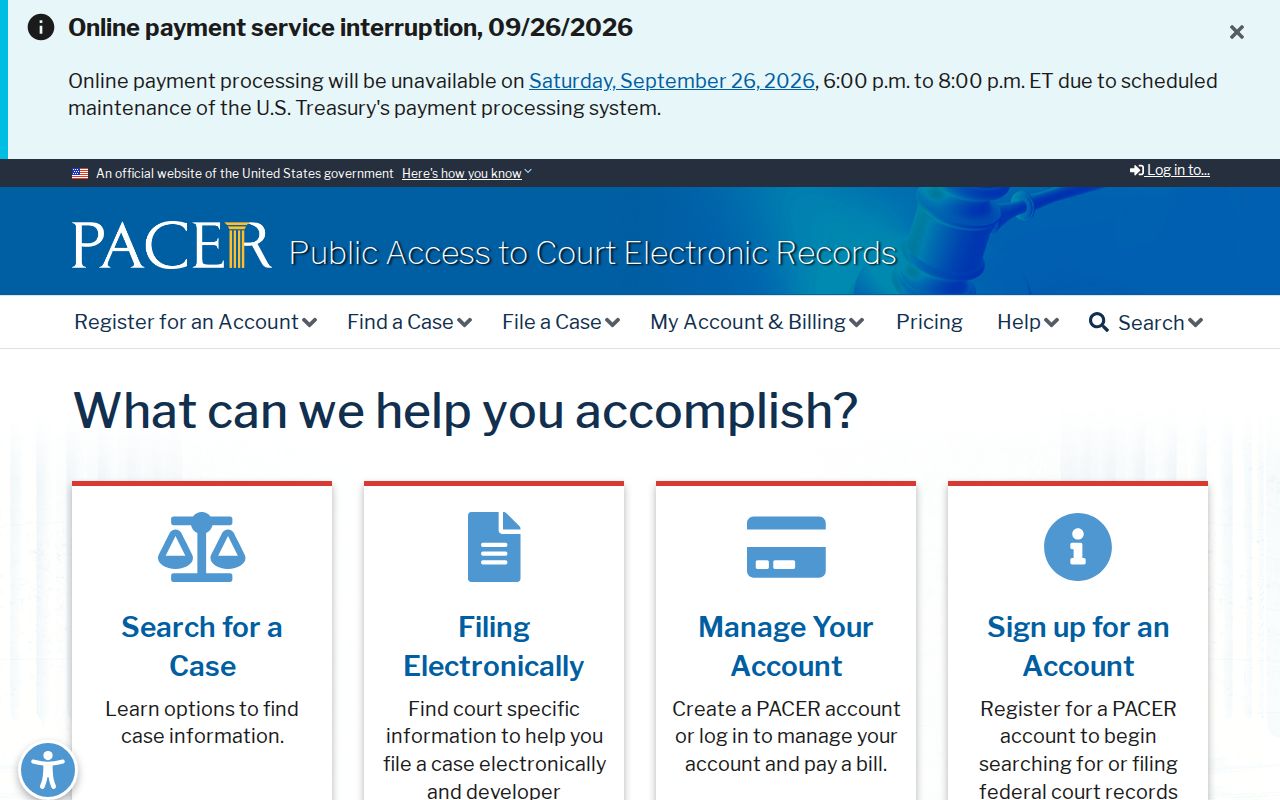
PACER is a federal case-docket service, not a statewide or federal warrant roster.
Federal Warrants Across Tennessee
Three U.S. District Courts divide federal jurisdiction across Tennessee: Eastern, Middle, and Western. Their published county allocations total Tennessee's 95 counties. The district that matters depends on where the case was filed. Each district runs more than one courthouse or division. So check the court's current jurisdiction page instead of guessing from a person's present location. The U.S. Marshals Service serves federal court orders. Task forces mix federal officers with state and local partners. The Smoky Mountain, Middle Tennessee, and Two Rivers programs work different parts of the state. Their work helps locate people sought on eligible process. A task-force page or press release is not a searchable register of state or city warrants. Federal and Tennessee state records sit with different courts and agencies. The Eastern District, Middle District, and Western District each publish court information. Use those sources for district routing.
Statewide System vs County Warrant List
A statewide justice system and a county warrant list are two different views with different audiences and limits. TNCRIM, TCIC, TIES, and NCIC serve restricted justice channels only. A sheriff's online search, where one is offered, draws on data a local court supplies. It shows only what that agency publishes. The authoritative case file and warrant order stay with the issuing Tennessee court and local law enforcement. Anyone checking a Tennessee matter should use both routes. Ask the clerk, and follow any local sheriff or city police process the clerk identifies. The county directory leads to that local path.
| Feature | Statewide System | County Warrant List |
|---|---|---|
| Audience | Authorized criminal-justice users | Public access varies by sheriff, city, and court |
| Coverage | Eligible entries available to approved agencies | Local records selected for public access |
| Record of Record | Restricted information used by agencies | Issuing court and local serving agency |
| Update Timing | Not published as a universal public schedule | Set by local court or agency policy |
Tennessee Warrant Records Stay With the Issuing Courts
The AOC counts 32 judicial districts across Tennessee. Tennessee still has no single shared public database for trial-court records. General Sessions, Circuit, Criminal, Chancery, Juvenile, and city courts each play different roles with different clerks. One county can run separate case platforms for these court levels. A docket link on an AOC page may land in a local or vendor system. That link does not certify current warrant status. Real status comes from the court. The 2025 Statewide Court Systems Technology Solution Report describes non-unified local case technology and planning for statewide case management and e-filing. The modernization matters for Tennessee courts. A planned procurement is not a warrant portal today. For a Tennessee warrant check, the public route is still the clerk where the case began. Pair that with the local agency holding the process for service. The 2025 AOC technology report gives the system-wide context, and the AOC Self-Help Center offers warrant-routing guidance.
Tennessee Warrant Status Needs Local Confirmation
Tennessee warrant status is a local question. Statewide entries and court orders can drift apart. A recall may sit in a judge's order before it reaches any database. So ask the clerk whether the disposition went out to the sheriff or city police agency serving the warrant. Ask whether any authorized database entry still needs an update. Keep your copy of the order or docket disposition. Tennessee publishes no consumer-facing status feed, and no rule fixes how quickly a local record changes. Bonds deserve the same caution. Money can secure release while the criminal case stays open. Posting bond does not dismiss the case or confirm the warrant process is closed. Ask the clerk exactly what the court ordered. Ask the local agency what it received. An attorney can help you deal with the court when a surrender, motion to recall, or bond question is involved. For a Tennessee status check, start at the court where the case began, then use the county directory to locate that court along with its sheriff or municipal police counterpart.
Tennessee Warrant-System History and Technology
Tennessee built its warrant technology for officers first. TBI's Technology & Innovation Division dates to September 2019. It consolidated technology functions inside the bureau. That division describes THOR as a joint project with TDOSHS that replaced the Consolidated Records Management System. THOR+ runs on Coplink X and reaches sworn Tennessee officers only. None of this created a public warrant search. The Integrated Criminal Justice Portal has its own story. It began as a shared interface to systems run by multiple agencies. An older Department of Safety announcement pitched it to authorized law-enforcement and court users and listed a Wanted Persons database. TNCRIM materials still restrict access to legally authorized users. Tennessee's statewide interface sits alongside locally controlled court case systems rather than replacing them. The 2025 court technology report states the public gap plainly. Local platforms are not yet a unified public index. Check the TNCRIM Wanted Persons help page for its system contact, or use the county directory to reach the local clerk and sheriff for a case-specific status check.