
Municipal Court Warrants in Tennessee
A municipal court warrant is process that grows out of a case a city court is already hearing. Tennessee towns large and small run these courts. Under statutes or city charters, they hear ordinance violations, parking tickets, traffic matters, and related local cases. Order someone to appear and they skip it, and the judge can respond with a warrant or other process in that same case. What happens next depends on the charge, the court's authority, and the record sitting in front of the judge that day.
. The city tier runs beside the county system. A municipal clerk holds the city's citations and ordinance files. The county clerk across the square may keep an entirely separate General Sessions file. A city case stays a city case no matter which county surrounds the city limits, so the citation or paperwork tells you which door to knock on. When a city record proves hard to locate, the Tennessee Public Records Act offers a direct route: send a written request to the city custodian who actually holds it. A narrow request works best. Name the citation, the docket, the date range, and the order you want. The law does not force a city to build a statewide warrant list, only to deal with the records it keeps. The Comptroller's TPRA guidance walks through this custodian-by-custodian approach for Tennessee requesters.
Tennessee Municipal Warrants Stay With City Cases
A warrant from a municipal court follows its own case around. The city clerk is the first stop for citation details, court dates, and the orders on record. Service varies by municipality. City police handle it in some towns, a municipal marshal in others. A county sheriff can confirm things, but a sheriff's list may cover only county court data and skip city process altogether.
. Tennessee publishes no single list that merges every municipal docket and warrant. Finding a case in a city portal proves just one thing: the case record exists there. It says nothing about whether a warrant was issued, still sits active, or has been recalled. Ask the clerk which agency tracks the live status. Then call that agency if you need separate confirmation.
How Tennessee Municipal Warrants Differ From County Warrants
The difference comes down to which court holds the case. A municipal warrant comes from a city court working under its local laws and charter. A county warrant comes from a county-level court or another court with authority over the matter, and General Sessions often carries the county's misdemeanor, traffic, and preliminary felony work in Tennessee. For what a bench warrant or an arrest warrant means beyond the municipal tier, the court and case context controls. Same state, different doors.
| Feature | Municipal Court Process | County Court Process |
|---|---|---|
| Issuing Court | City or municipal court acting within local authority. | General Sessions or another court with authority over the county case. |
| Typical Matters | Local ordinance, parking, traffic, and related matters set by law or charter. | Many county misdemeanors, traffic matters, and felony preliminary proceedings. |
| Record Custodian | Municipal court clerk for the city's case file. | General Sessions clerk or the clerk responsible for the trial-court file. |
| Service / Confirmation | City police or marshal may handle service; verify with the issuing court. | County sheriff or another authorized agency may handle service. |
| Public Search | Local tools vary; a city case search may not display warrant status. | Some counties publish limited lists; no public statewide index covers all cases. |
Court, clerk, and service route can all differ for cases inside one Tennessee county. Check a municipal citation with its issuing city court first. Don't lean on a county-level list or search result alone.
Tennessee Municipal Warrants Have No State Portal
Tennessee's Administrative Office of the Courts offers resources and courthouse directories. What it does not run is a public statewide active-warrant name search. Trial courts keep their own local records systems, so an online case result promises nothing about warrant fields. No uniform municipal portal spans every Tennessee city.
. Access depends on the city and the record. Some municipalities post a case or docket lookup. Others send you to the clerk or the police office down the hall. A county sheriff's list cannot replace asking the city that issued the citation. And if a Tennessee city search comes back silent, call the municipal clerk. Silence is not confirmation that no process exists. The Tennessee AOC court resources can point you to the right local court, though they don't combine warrant status from across the state.
How to Check a Tennessee Municipal Court Warrant
Every municipal check starts with the city named on the citation, order, or case file. Tennessee AOC guidance sends warrant questions to the clerk where the case began. For a city citation, that means the municipal clerk. Bring the case or citation number, the name on the filing, and the rough court date. Then ask plainly: did the court issue a warrant, and does the current docket show service, recall, or another order?
- Identify the municipality and court printed on the citation or notice.
- Ask the city clerk whether an official case-search tool exists and whether it displays process status.
- Use the Tennessee county directory to locate the municipality's local route and county-level contact information.
- Confirm any warrant or service status with the city police or marshal if the clerk directs you there.
- Before appearing, posting bond, or paying, ask the clerk or counsel what process the court accepts.
The AOC Self-Help Center likewise tells Tennessee callers with warrant questions to reach the clerk of the court where the case originated.
Tennessee Municipal Warrant Search Fields Vary
Chattanooga offers a useful lesson in how Tennessee cities run a case lookup. The city's portal takes a name, a citation number, or a docket number. Last name is required. Everything else, from first name to driver-license number, is optional. The first name, date of birth, and driver-license number fields stay optional, and a checkbox can pull in similar-sounding names when spelling is unsure. None of that makes it a warrant database. The portal locates case and docket information, but the City does not promise it identifies an active warrant. A Tennessee warrant search still ends with a call. Phone the clerk and ask about current process, the next hearing, and any reset or recall order. Be careful with similar-name results. The match may not be your person. Confirm the case identity before you act. The City lays out its City Court records instructions, which describe the search fields and link to the case-search service.
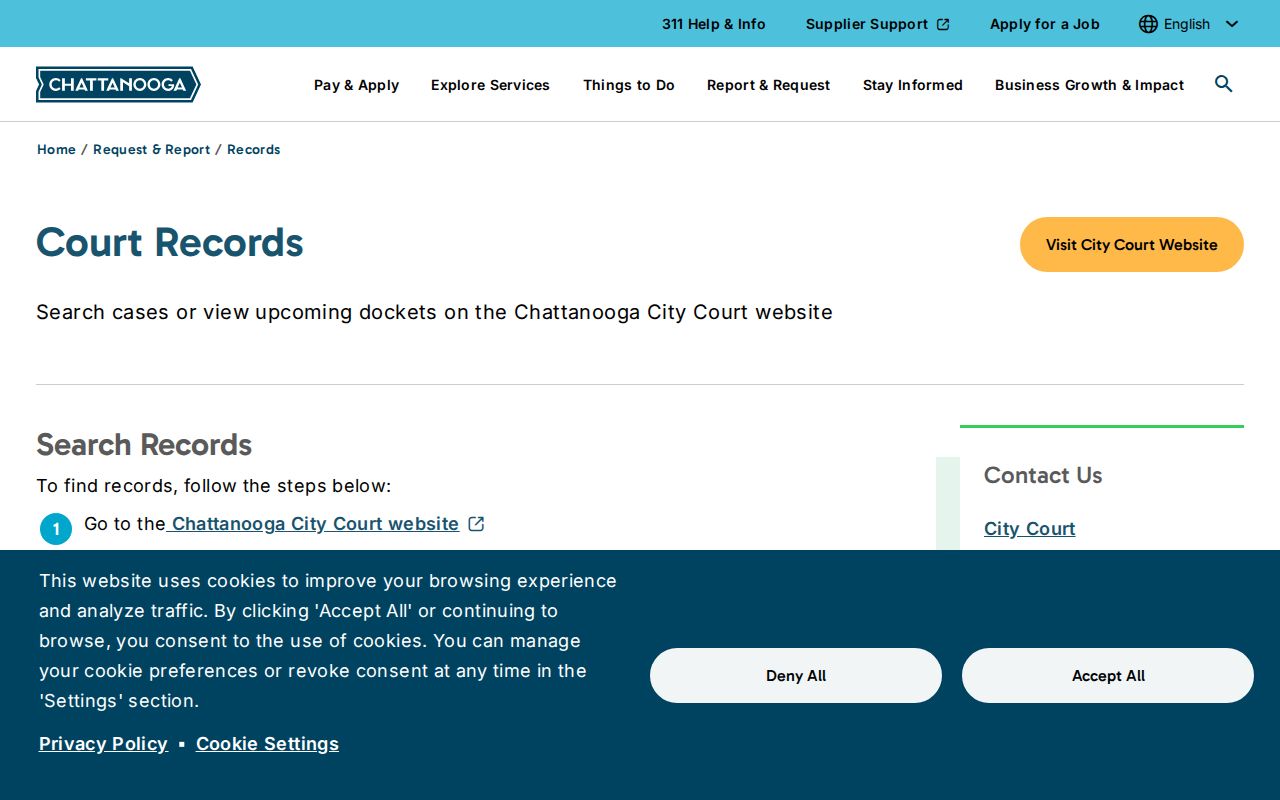
The City instructions cover a local case-search route only; Tennessee publishes no statewide municipal warrant database behind them.
What a Municipal Warrant Shows
Tennessee publishes no statewide schema for municipal warrant results. A city portal may show a citation or docket with no warrant field at all. Local software differs. Treat those gaps as questions for the clerk, not as promises about what every city record holds. Confirm the case identity and the current court order before deciding what to do.
| Case or Process Number | The court's reference format varies by city; format varies and no statewide municipal format is published. |
|---|---|
| Name and Citation | Compare the filed name and citation or docket number; ask the clerk to resolve similar-name questions. |
| Charge or Ordinance | Read the cited matter and the court's order; an accusation is not itself a finding. |
| Issuing City Court | Confirm the municipality and clerk that control the case. |
| Bond or Payment | If the court set a bond or payment amount, ask the clerk for the current terms and accepted method. |
| Process Status | Ask whether process is active, served, recalled, or otherwise resolved; statewide result fields are not published. |
Think of these entries as prompts for a local status check, not a published Tennessee schema. A city portal can omit the warrant field entirely. Ask the clerk which existing order or process record answers the question.
Tennessee Municipal Warrant Records Lack One Schema
Tennessee publishes no statewide format for city-court warrant results. Its public instructions promise no warrant-status field. Chattanooga's portal is documented as a case and docket search, so a citation on screen says nothing about an active warrant. Other Tennessee cities organize records differently. A sheriff's interface shows only what that agency receives. So a case number, citation, docket entry, or payment receipt is not proof a warrant is active or recalled. Ask the clerk for the court's own record of any process. Get the date of its latest action too. If the clerk points to a separate police or marshal system, ask which office holds it. A focused request for an existing docket entry, warrant order, or record of final action beats a statewide summary.
- Bench warrant
- Court process ordering a person to appear or be brought before the court; local records may use a different process label.
- Recall
- A court action withdrawing a warrant or other process; ask for the order or docket entry.
- Bond
- A court-set amount or condition tied to appearance or release; it is separate from a fine.
- Capias
- A command to bring a person before court. Tennessee Rule 9 uses a capias in post-indictment criminal proceedings; that is not a generic unpaid-ticket label.
The official Tennessee Rule 9 text concerns post-indictment process, not routine city-ticket collection.
Resolving a Municipal Court Warrant
The issuing city court controls the recall and the next court date. Paying a fine, showing up, or posting bond may address one part of the case. Not every Tennessee record updates at once. Ask the clerk which option applies. You might pay the citation, request a payment arrangement if the court offers one, appear before the judge, file a motion, or post the bond ordered in the case. Tennessee sets no uniform municipal fee or bond schedule. No single Tennessee walk-in surrender or automatic recall procedure exists. Contact the city clerk or counsel before you go to a police counter, a jail, or a courtroom. Ask whether the judge requires an appearance, a motion, or a bond payment at a particular office.
- Ask the clerk to confirm the court, citation, current warrant status, and recorded disposition.
- Ask what the judge or clerk will accept: a scheduled appearance, a reset request, a motion, or a permitted payment arrangement.
- Complete the court-approved payment, hearing, or bond step; get a receipt or order showing what happened.
- Ask the court to recall outstanding process and confirm whether the city police or marshal received the update.
- If a related license notice exists, handle that compliance step separately with TDOSHS.
Caution: A case search or payment receipt does not prove a warrant was recalled. Ask the issuing court for its order and confirm any separate police record.
Tennessee Municipal Warrant Process Is Judge Specific
A missed date in Tennessee city court does not always produce an arrest warrant. It depends on the judge. Chattanooga's court information says a missed setting may instead bring a default judgment, a ruling entered because a required appearance was missed. Resets need judicial approval, and the court promises no automatic extension when someone cannot pay by the due date. Those are local rules. Still, they show why you should ask the issuing Tennessee court what happened rather than assume a warrant issued. If a date was missed, call the clerk. Ask whether the court entered a default, issued process, or will consider a reset or a new appearance before the judge. Chattanooga also lists its citation-payment routes. A payment channel alone does not establish recall. Follow the Tennessee court's case-specific direction. Keep a copy of any ruling. The City's current court information page describes its local reset and missed-date rules.